
The DAAA Explained: How to Handle a Car Accident in Portugal Without Making a Costly Mistake
The DAAA (Declaração Amigável de Acidente Automóvel) is Portugal's official accident declaration form used for minor two-vehicle accidents where both drivers agree on what happened and no one is injured. You should sign it only if exactly two vehicles are involved, nobody is hurt, both drivers are calm and insured, and you agree on the facts—otherwise call 112 immediately. Once signed, the DAAA becomes legally binding and your insurer will base their liability assessment on what's written, so disagreements must be noted *before* signing, not after.
You've just had a bump. Both cars are on the side of the road, engines off, drivers out. Your hands are shaking slightly and the other driver is already pulling a folded paper from their glovebox. That paper is the Declaração Amigável de Acidente Automóvel (DAAA), Portugal's official accident declaration form, equivalent to the French constat amiable, and what you do with it in the next 20 minutes will directly affect who pays for what.
Most expats have never seen one before. Some sign it without reading it. Others refuse it out of confusion and end up in a far messier situation than they needed to be. This guide walks you through every line of the DAAA: when to use it, when to put it away and call 112, what each section actually means, and how to avoid the specific mistakes that shift liability onto you, even when the accident wasn't your fault.
📌 Ready to get covered?
When to Use the DAAA, and When to Walk Away From It
The DAAA is designed for one specific type of accident: two vehicles, two calm drivers, and a shared understanding of what happened. If that describes your situation, the DAAA is your fastest, cleanest route to a resolved claim.
Use it when:
- Exactly two vehicles are involved
- Nobody is injured, not even slightly
- Both drivers agree on the basic facts of what happened
- Both drivers are insured and can provide their policy details
- Both parties are calm and under no pressure
Stop, put the form away, and call 112 immediately when:
- Anyone is injured, even if they say they're fine (adrenaline masks pain)
- More than two vehicles are involved
- The other driver is aggressive, under the influence, or behaving erratically
- The other driver is pressuring you to sign quickly or is altering what you've agreed
- There's any suspicion of alcohol or drug use
- The other driver flees the scene
- You disagree on who caused the accident and can't reach a calm consensus
This last point deserves emphasis: a signed DAAA is a legally binding document. Once both signatures are on the form, it becomes official and opposable, meaning your insurer will base their initial liability assessment on exactly what's written there. Disagreement noted after signing is far harder to resolve than disagreement noted on the form before signing.
The e-SEGURNET App: The Legal Digital Alternative
Portugal has a fully official digital version of the DAAA: the e-SEGURNET app, developed by the ASF (Autoridade de Supervisão de Seguros e Fundos de Pensões) and the insurance sector. It's legally valid and increasingly preferred, especially because it integrates GPS geolocation and photo capture directly into the declaration process.
Here's what most expats don't realise: only one driver needs the app. If you have it and the other driver doesn't, you can complete the digital DAAA together on your phone and both validate it. The other driver receives a copy by email or SMS.
Why it's worth having before you ever need it:
- Automatically records the GPS coordinates of the accident location
- Lets you attach photos directly to the declaration (damage, road position, surroundings)
- Eliminates the risk of illegible handwriting invalidating sections
- Transmits the completed form directly to both insurers
- Generates a reference number confirming receipt
Download it before you need it. It's free, it's in Portuguese but straightforward to navigate, and having it on your phone costs nothing. Search "e-SEGURNET" in your app store. If the interface feels daunting, a paper DAAA in your glovebox as backup is entirely fine, both are legally valid in 2026.
The Circumstances Boxes: The Section That Catches Expats Out
The middle section of the DAAA, the circumstances checkboxes, is where most liability mistakes happen. There are 17 numbered boxes on each driver's side of the form. You tick only the boxes that were true for your vehicle at the moment of impact. Seems simple. It isn't.
Some boxes are near-automatic admissions of fault. If you tick them without understanding what you're acknowledging, you hand over liability regardless of what actually happened. The two most important ones to know:
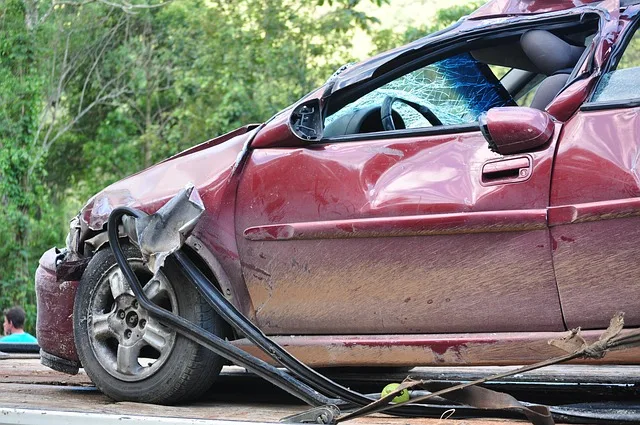
- "Saía de um parque de estacionamento / abria uma porta" (leaving a parking space / opening a door): if you were pulling out of a parking spot when the collision occurred, ticking this almost always results in you being held responsible. Even if the other car was badly positioned or moving erratically.
- "Efectuava uma marcha-atrás" (reversing): similar principle. If you were in reverse, the presumption tends to go against you.
The rule: tick only what was literally true for your vehicle at the exact moment of impact, not what was happening five seconds before, not what the other driver was doing, not what you think should be on there to tell the full story. The circumstances boxes describe physical states and manoeuvres, nothing more. If neither of you was doing anything listed, leave the box blank rather than ticking the closest approximation.
Both drivers fill in their own column independently. You are not agreeing on each other's boxes, you're each declaring your own situation. This is a common misunderstanding: you don't need to agree on the circumstances section, only on the sketch and the number of ticked boxes at the bottom.
Drawing the Accident Sketch: What Your Diagram Needs to Show
The sketch section asks you to draw a diagram of the accident. This feels informal but it carries real evidential weight, especially if the circumstances boxes are ambiguous or disputed.
A good sketch includes all of the following:
- Road layout: lanes, junctions, roundabouts, parking areas, draw the actual shape of the road, not a vague line
- Direction of travel: arrows for both vehicles showing which way each was moving before impact
- Vehicle positions at impact: mark vehicle A and vehicle B exactly where they were when they hit, not where they ended up afterwards
- Road markings and signs: any traffic lights (and their state if relevant), stop signs, give-way lines, central reservations, white lines
- Point of impact: mark the spot on the road where contact occurred
Use the letters A and B to label each vehicle consistently throughout the form. If the accident happened at a junction, draw all four arms of the junction even if only two matter. If there was a pavement, draw it. Spatial context matters enormously when an assessor is reading this weeks later with no other information.
Don't worry about artistic quality. Neatness and accuracy beat style. If you use the e-SEGURNET app, the sketch tool is digital and easier to manage, but a clear hand-drawn diagram on a paper form is perfectly sufficient.
The Observations Box and Signing: Your Last Line of Defence
The observations box (zona de observações) at the bottom of the form is often left blank. It shouldn't be.
This is where you note anything that matters but doesn't fit elsewhere:
- Any disagreement with the other driver's version of events
- Witness details (name, phone number)
- CCTV cameras you noticed nearby
- Relevant road conditions (wet surface, sun glare, roadworks)
- Any behaviour by the other driver you want on record
- The presence of passengers in either vehicle
If you disagree with anything the other driver has written in their column, and you've noted it in observations, your insurer knows there's a disputed version. That's important. It doesn't invalidate the DAAA, but it flags that liability isn't cut and dried.
On signing: never sign a DAAA if you don't understand what you're signing. This is not a matter of politeness or avoiding awkwardness. If the other driver's column contains something you haven't read, or is in a language you can't follow, or was filled in while you weren't looking, don't sign. You can refuse. You can request time. You can call someone who speaks Portuguese. A signed DAAA is your statement. Once it exists, it's very difficult to retract.
Each driver keeps one copy. The form has two identical sides, one for each party. Before you separate, verify that both copies are signed and that the total number of ticked boxes matches on both sides.
What Happens If the Other Driver Isn't Insured, or Flees
These are the two scenarios where the DAAA process collapses entirely, and expats are often unsure what to do.
Hit and run: If the other driver leaves, do not chase them. Note the registration plate immediately, photograph it if possible, write it on your phone, say it aloud and record yourself saying it. Note the make, model, and colour of the vehicle. Get witness details if anyone saw it happen. Call the GNR (112 outside urban areas) or PSP (112 in cities) to file a report. Then contact your insurer immediately. In Portugal, the Fundo de Garantia Automóvel (FGA) exists precisely to compensate victims of hit-and-run accidents and uninsured drivers, but you need a police report to access it.
Uninsured driver: If the other driver admits they have no valid insurance, don't accept an informal cash offer and drive away. Get their personal details (name, national ID number, address, phone), photograph their vehicle, call the police, and contact your insurer. The FGA covers material damage and personal injury caused by uninsured drivers, but again, the police report and prompt notification to your insurer are non-negotiable.
In both cases, your insurer cannot help you effectively if you delay. Which brings us to the deadline.
The 7-Day Rule: Your Declaration Deadline
Under Portuguese law and standard policy conditions, you have a maximum of 8 days from the date of the accident to notify your insurer, but the effective working rule most insurers apply is 7 days. Miss this window and you risk your claim being reduced, delayed, or rejected entirely, depending on your policy terms.
If you use the e-SEGURNET app and both parties complete it at the scene, the transmission to both insurers happens automatically. Your notification obligation is effectively met at the roadside. This is one of the strongest practical arguments for the app.
With a paper DAAA, you need to deliver or transmit your copy to your insurer within those 7 days. Check your policy documents for the exact method your insurer requires —
See also: Car Insurance Prices in Portugal, What Expats Really Pay in 2026, How to Register a Foreign Car in Portugal, ISV, IMT and Insurance.
See also: Expat Car Insurance in Portugal 2026: Complete Guide.