
Yacht & Boat Insurance Quote in Portugal 2026: Expat Guide
Boat insurance is not required for D7 or D8 visa applications or residency in Portugal—it only becomes legally mandatory when you register your vessel under the Portuguese flag, sign a marina contract, or place it on Portuguese waters, per Decree-Law 124/2004. The visa process requires €30,000 minimum health insurance coverage instead, not boat coverage. Insurance requirements trigger at the point of boat registration or use in Portugal, not at immigration.
If you're applying for a D7 or D8 visa and wondering whether you need boat insurance before you arrive, you don't. Boat coverage appears nowhere on the official AIMA checklist, the consulate requirements, or SEF's residency documentation. The confusion is understandable, because cars require mandatory RC (Responsabilidade Civil) and mortgages require home insurance, so people assume boats must follow the same residency logic. They don't.
What actually triggers the requirement for boat insurance isn't your visa status, it's what you do with the boat once you're in Portugal. Specifically: registering it under the Portuguese flag, signing a marina contract, or simply putting it on Portuguese waters. That's the point where civil liability insurance stops being optional and becomes a legal requirement under Decree-Law 124/2004 and subsequent recreational vessel regulation.
Here's exactly what's required, when, and what it'll cost you in 2026.
📌 Ready to get covered?
What the D7 and D8 Visa Actually Require (And What They Don't)
Let's be precise about the two-stage process, because the requirements differ between the consulate application and the AIMA residency appointment.
Consulate stage (D7 or D8 application): You need travel insurance with a minimum of €30,000 medical and repatriation coverage, valid for the Schengen area, covering the full duration of your initial stay (typically 12 months). This is the Schengen standard, the same requirement that applies to a tourist visa, just extended. The policy needs to be active, and some consulates want to see proof it's renewable or that you'll transition to private health coverage.
AIMA residency appointment (in Portugal): By this stage, you're expected to have private health insurance that gives you access to the Portuguese network, policies from providers like Médis, Multicare, Fidelidade, or AdvanceCare are standard. The minimum coverage threshold remains €30,000 for medical care. This is what unlocks your autorização de residência.
Boat insurance: not mentioned at either stage. Not implicitly, not in practice, not even in the notes. If you own a yacht in the Algarve and a jet ski in Cascais, neither of those assets affects your visa or residency status in any way. The AIMA documentation checklist is focused on income proof, health insurance, NIF, housing, and criminal record certificates, full stop.
So where does boat insurance become genuinely mandatory? Three specific triggers, all separate from residency.
The Three Triggers That Make Boat Insurance Legally Required
These apply to any boat owner in Portugal, whether you arrived last month on a D7 or you've held citizenship for 20 years. Residency status is irrelevant.
Trigger 1: Operating on Portuguese waters. Under the legal framework governing recreational vessels, any motorised or sailing craft operating on Portuguese territorial waters must carry civil liability (RC, Responsabilidade Civil) insurance. This isn't unique to Portugal, it mirrors what most EU member states require, but the enforcement point varies. For smaller craft below 2.5kW, registration may not be required, but the moment your boat qualifies for registration with the Direção-Geral de Autoridade Marítima (DGAM, formerly operating as AMN in some contexts), RC coverage is a legal precondition.
Trigger 2: Portuguese flag registration. If you're registering your boat in Portugal, whether it's a new purchase or a transfer from a UK, French, or Belgian registry, the registration process requires proof of a valid RC apólice (policy). You cannot complete registration without it. The insurance doesn't need to be comprehensive; the legal minimum is third-party civil liability. But it needs to be in place before the paperwork goes through.
Trigger 3: Marina contract signing. This is where most expat boat owners first encounter the real-world requirement. Over 95% of marina contracts in Portugal, Vilamoura, Cascais, Lagos, Portimão, Figueira da Foz, require proof of RC coverage at minimum before they'll assign you a berth. Many marinas will also require a minimum insured value for hull damage, particularly for vessels over 10 metres. The marina isn't enforcing national law here; it's enforcing its own contractual terms. But the effect is identical: no insurance, no berth.

The practical upshot: you can own a boat in Portugal without insurance until any of these three events occurs. Once one of them does, RC coverage becomes non-negotiable.
Coverage Levels and Real Costs by Expat Scenario
The "boat insurance quote Portugal expat" question almost always comes down to: what kind of boat, in what context? Here are the four scenarios that cover most expats arriving in 2026.
D7 Visa Holder, No Boat
Boat insurance: never needed. Your visa insurance requirement is satisfied entirely by your health policy. If you later decide to buy a boat after settling in Portugal, that's when you revisit this page.
Jet Ski or Small Powerboat, No Marina Berth
The legal minimum RC kicks in at registration. For a jet ski or small powerboat (typically under 7 metres), a basic RC-only policy costs roughly €80–150/year. This covers third-party liability, if you collide with another vessel or injure someone, your insurer covers their losses up to the policy limit. It doesn't cover damage to your own craft. Most expats in this scenario take the RC minimum and nothing more until they've assessed how much they use the boat.
Vilamoura or Cascais Marina Berth, 8–12m Sailboat
This is the most common expat scenario in the Algarve and Lisbon coast. Marina contracts at Vilamoura typically require RC coverage at a minimum, and the contract documentation will specify the minimum liability limit (often €600,000–€1,000,000). A mid-tier policy covering RC plus theft and fire for a 10-metre sailboat runs €250–400/year. If you add hull coverage (which protects the boat itself in a collision or storm), you're looking at €400–700/year depending on the vessel's age and condition.
The marina will ask for your apólice as a PDF at contract signing, you'll need your insurer's certificate of coverage, not just a quote confirmation.
Yacht Over 12 Metres, High-Value Vessel
Comprehensive coverage becomes the practical standard here, because the hull value alone justifies it. A comprehensive policy for a 12-metre-plus yacht covering RC, hull damage, theft, crew liability, and rescue costs typically runs €1,000–3,000/year. At this level, insurers often require a survey of the vessel and details of skipper qualifications. The RC component is legally mandatory; the rest is strongly advisable given what a serious claim could cost without it.
For a detailed breakdown of all coverage types and how to read a Portuguese marine policy, see Boat Insurance in Portugal for Expats 2026: Complete Guide.
📌 Ready to get covered?
The Expat Timeline: Month by Month
Here's how boat insurance actually fits into a realistic expat arrival sequence. The residency process and the marine insurance requirement run on completely separate tracks.
- Month 0, D7/D8 visa approval: Your obligation is health insurance only. Minimum €30,000 medical coverage, Schengen-valid. Boat insurance: irrelevant.
- Month 1–3, Settling in, AIMA appointment: Private health policy active, Portuguese network access confirmed. NIF sorted, housing documented. Still no boat requirement unless you've arrived with a vessel.
- Month 4–6, Decide to buy a boat: The moment you purchase a vessel and initiate registration with DGAM, you need RC coverage to complete registration. Budget €80–400/year depending on vessel size and coverage tier. This is the first point boat insurance enters your financial planning.
- Month 6–8, Marina contract: If you want a permanent berth in Vilamoura, Cascais, or another marina, you'll need to present proof of coverage at contract signing. The marina's minimum requirements are in the contract terms, read them before you sign, because they specify minimum liability limits, not just "some insurance."
- Annually, Renewal: Both your health insurance and your boat RC renew annually. Portugal also has an annual vessel tax (IUC for recreational vessels registered in Portugal), a separate obligation, but worth flagging in the same renewal window.
What this timeline makes clear: the visa and the boat are sequential decisions, not simultaneous ones. You don't need to arrive with marine insurance sorted. You need to sort it when ownership and usage actually require it.
Why This Confusion Keeps Coming Up
Expats conflate boat insurance with residency requirements for a fairly logical reason: the pattern holds for everything else. Cars arriving in Portugal require mandatory RC from day one on Portuguese roads. Property purchased with a mortgage requires home insurance as a lender condition. So the assumption is that a boat must slot into the same "asset equals insurance obligation" logic at the residency stage.
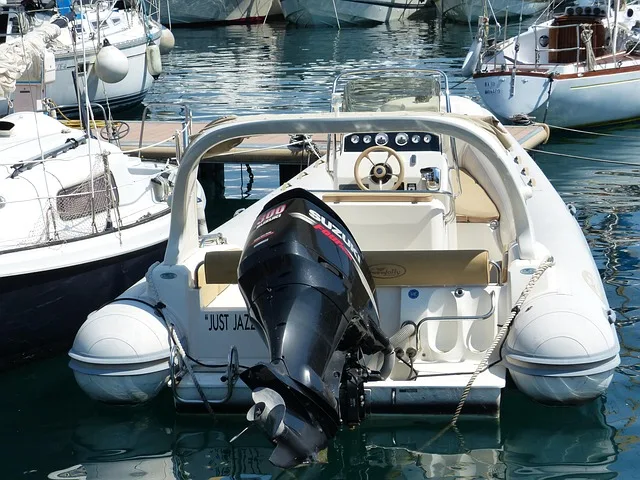
The difference is that cars are driven on public roads (which creates a direct, universal regulatory trigger from first use) and mortgages create a contractual obligation with a lender (who requires protection of their security). Boats sit in a slightly different regulatory category, they're required to carry RC once registered or on Portuguese waters, but that requirement isn't tied to your immigration status.
Marina contracts add to the confusion because the language in marina agreements often reads like a legal mandate. "Proof of valid insurance required for berth assignment" sounds indistinguishable from a statutory requirement. It's contractually mandatory, but it's the marina protecting its own liability exposure, not the Portuguese government conditioning your residency on marine coverage.
The practical effect is identical (you won't get the berth without insurance), but understanding the distinction matters if you're trying to sequence your obligations correctly after arriving on a D7 or D8.
Getting an Accurate Boat Insurance Quote in Portugal
A few things consistently catch expats out when they go to get their first marine insurance quote in Portugal.
No Portuguese claims history means higher starting premiums. Just as with car insurance, if you can't demonstrate a Portuguese (or EU-equivalent) no-claims record, insurers will typically apply a loading to your first-year premium. If you have a clean claims record from a UK, French, or Belgian marine insurer, get a letter confirming it, most Portuguese insurers will accept this to reduce your starting premium.
Skipper qualifications matter for larger vessels. For boats over a certain length and engine power, insurers will ask about your qualifications, specifically whether you hold a carta náutica (Portuguese boating licence) or an equivalent from your home country. If you're arriving from the UK, your RYA qualifications are generally recognised, but confirm this with the insurer at quote stage, not after you've bound the policy.
Where the boat is kept affects pricing. A vessel kept in a supervised marina with CCTV (Vilamoura, for example) will attract lower theft premiums than one moored on a river bank or kept in a private yard. Mention storage specifics when you request
See also: Importing a UK or French Boat to Portugal, Registration and RC Insurance Guide, Sailing Portugal to Azores or Madeira: Is Your Insurance Valid?, Boat Insurance Cost in Portugal 2026, Real Expat Prices.
See also: Yacht & Boat Insurance in Portugal for Expats 2026, Boat Insurance Quote in Portugal for Expats 2026.